- Tech
- Hospitality
Ask a hotelier what their access control system costs, and they'll quote you the lock contract. They won't mention the card stock reorders, the encoder maintenance, the desk minutes burnt on "my key stopped working", or the rekeying protocol that runs every time a card walks out the door and doesn't come back.
That's the tell. The key card isn't accounted for as a system — it's absorbed as background noise. And costs that get absorbed instead of measured are exactly the costs that compound.
Let’s Run the Actual Maths
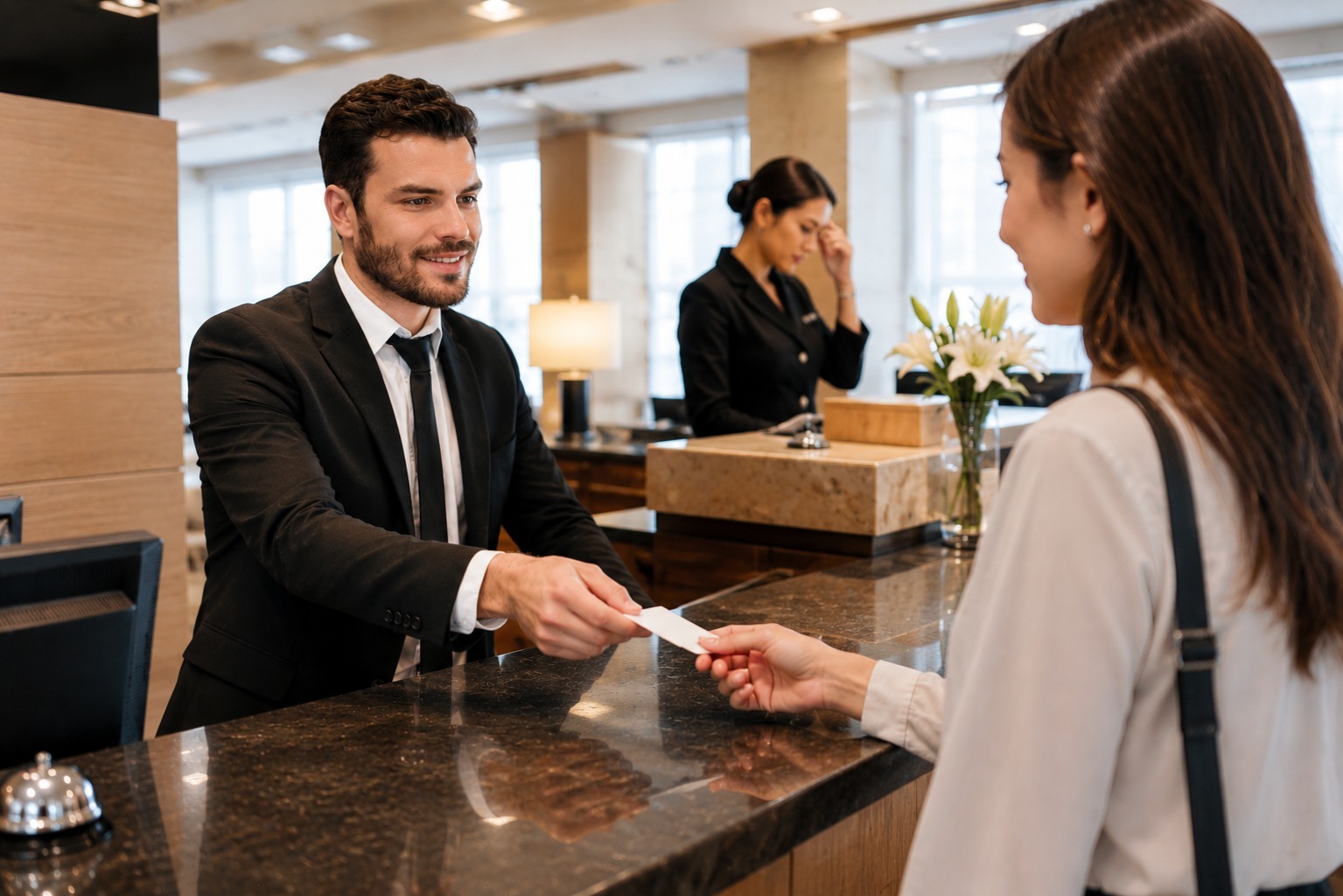
Take a 150-room property at 70% occupancy. That's roughly 38,000 room-nights a year. Most properties issue two cards per stay; factor in replacements for lost, damaged, and demagnetised cards, and you're encoding somewhere north of 40,000 cards annually — at one property.
Now layer in the failure economics:
The equation brings clarity:
- Demagnetisation is a design certainty, not bad luck. A phone, a wallet clasp, a magnetic bag closure — any of them can wipe a card. Industry service data consistently puts key-related issues among the top three front desk interruptions. Each one costs a staff member 5–8 minutes at the exact moment – peak check-in – when desk capacity is scarcest.
- Lost cards are a security event, not a supply cost. Proper protocol says rekey the lock. In practice, most properties don't, because it's tedious — which means the real cost of a lost card is either labour or exposure. You're paying one of them; you're just not choosing which.
- Card stock is a permanent line item. RFID cards run $1–3 apiece before printing and branding. It's small enough to ignore per unit and large enough to matter per year — the worst kind of cost.
None of these numbers is dramatic on its own. That's precisely why the industry has tolerated them for thirty years. But a recurring, unmeasured, per-guest cost that scales linearly with occupancy is not "the cost of doing business". It's an inefficiency with good PR.
The Friction Lands in the Worst Possible Moment
Hospitality research has been consistent on this for years: the first fifteen minutes of arrival disproportionately shape a guest's perception of the entire stay. The check-in ritual — queue, wait, receive card, hope it works — sits entirely inside that window.
Meanwhile, consider what your guest used that same phone for on the way to your property. It boarded their flight. It unlocked their rental car. It paid for the coffee they're holding. Then they reach your front desk and are handed a piece of PVC.
Guests don't file complaints about this. They just quietly recalibrate what kind of property they think you are. In a market where the business traveller and the under-40 leisure guest have already experienced phone-first access elsewhere, the key card has stopped reading as "standard" and started reading as "hasn't gotten around to it".
The Objections were Answered Honestly
This is where most vendor pitches go quiet, so let's not.
- My locks are five years old. Are you telling me to rip them out? No. SmartAccess is built on a hardware-agnostic platform that integrates with the lock brands most properties already run – Assa Abloy, Salto, Schlage, Yale — alongside smart ecosystems like SmartThings, TTLock, and Tuya. For most modern electronic locks, this is a software and credential-layer change, not a construction project. Where hardware genuinely needs upgrading, you'll know before you commit, not after.
- What about the guest with a dead battery or no smartphone? They check in the old way. Mobile access doesn't have to be a mandate to deliver its returns — if the majority of your guests bypass the desk, you've already reclaimed the desk. The card doesn't disappear on day one; it stops being the default.
- Isn't a phone a bigger security risk than a card? Wrong frame. The security argument for digital access isn't about which object is harder to steal — it's about revocation and auditability. A digital credential can be killed remotely in seconds. Every access event is logged and attributable. Compare that to the current reality: an unreturned plastic card with no identity, opening a specific door until someone remembers to rekey it. One of these is a managed credential. The other is a liability with a magnetic stripe.
What Actually Changes
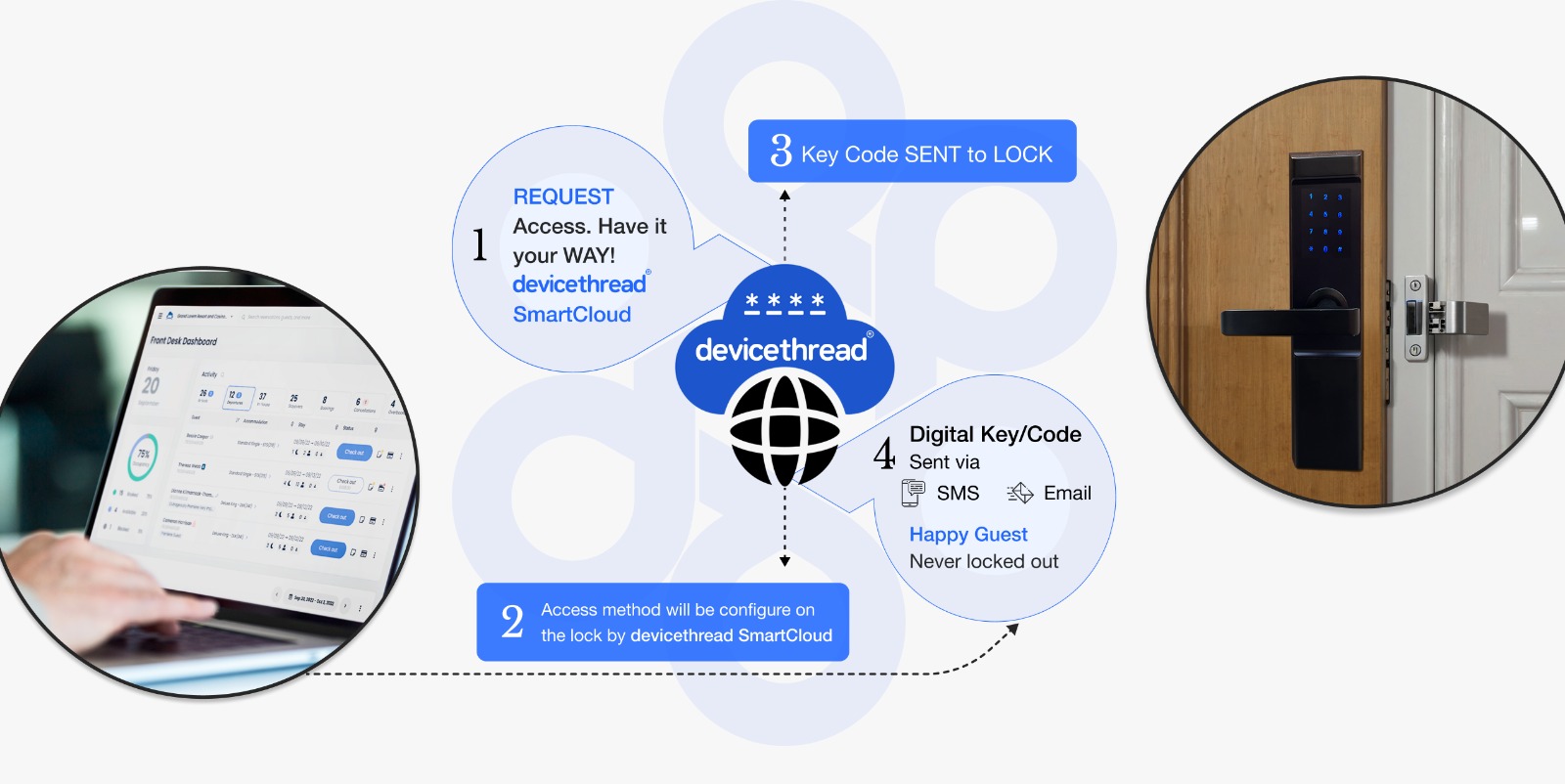
With SmartAccess, the credential is provisioned to the guest's phone the moment they check in — in person or in advance. From there:
- For the guest: 'Arrival' means walking to the room, not queuing for it. Room upgrades, extended stays, early check-ins — access updates instantly and remotely. At checkout, the credential is revoked. Nothing to return, nothing to remember.
- For the desk: the encoding workflow disappears from peak check-in windows. Lost-card interruptions drop toward zero. Staff time shifts from key logistics to the work that actually differentiates a property — being hospitable.
- For the operation: no card inventory, no encoder maintenance, no rekeying backlog, and a full audit trail on every door. And because SmartAccess runs on devicethread's unified platform alongside SmartEntertainment and SmartEnergy, access provisioning becomes a trigger, not an endpoint — the moment a guest's key goes live, the rest of their room can follow automatically.
The Bigger Picture
The key card survived this long because replacing it felt complicated, and the costs of keeping it were spread thin enough to ignore. Neither of those is true anymore. The integration problem is solved. The costs are measurable. And your guests have already made the switch everywhere else in their lives.
The plastic card had a good run. It's the one retiring. The front desk just got promoted to guest experience.
- Not ready for a call? Fair. Start with the maths instead, request our key card cost worksheet and run your own property's numbers in ten minutes.
- Ready to see it working? Book a 20-minute walkthrough with the devicethread team.